Smooth is not one thing. A surface can look smooth in a shaded render and still carry a crease that splits it into thousands of faces the moment it reaches SolidWorks or Onshape. It can pass a tangency check and still throw a visible kink in the reflection on a painted panel. NativeCAD 0.28 "Herreweghe" treats continuity as something you build to a specification and then prove, not something you eyeball.
Here is what that means in practice.
G0 to G4 in one minute
Continuity says how smoothly two surfaces, or two pieces of one surface, meet:
- G0: they touch, possibly with a crease.
- G1: their tangent planes agree. No crease, but reflections still bend sharply at the join.
- G2: their curvature agrees too. The usual line between "smooth" and "class-A".
- G3: the rate of change of curvature agrees, so highlights run across the join without changing speed.
- G4: one derivative more, for the most demanding visible surfaces, where a car body is judged by its reflections.
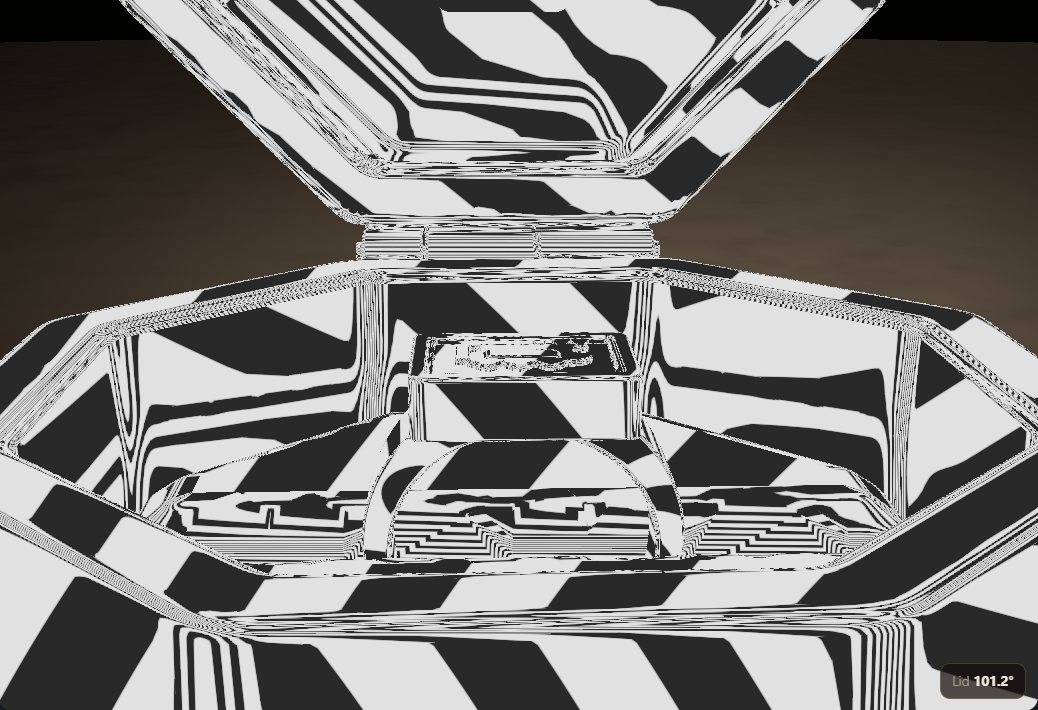
The way to see it is the zebra (reflection-line) view: light stripes mirrored off the surface. A G0 join breaks them, a G1 join kinks them, and G2 and above keep them connected, with G3 and G4 keeping their spacing smooth too. Inside a single B-spline face the same rule falls out of the knot vector: a cubic with simple knots is C2, a quartic C3, a quintic C4. A quintic face is G4 inside by construction.
What NativeCAD builds, and what it measures
Building a level of continuity and proving it are separate capabilities, and NativeCAD does both. Tool by tool, in 0.28:
| Capability | Builds | Measures |
|---|---|---|
| Inside a face: fits, nets, boundary and fill surfaces, spline lofts, sweeps | G2 by default (cubic, simple knots) | Every interior knot line, graded G0 to G4 |
Inside a face, on request: cad_fit_curve / cad_fit_surface {continuity: "G3" | "G4"} | G3 (quartic) or G4 (quintic), refused by name if the data cannot reach it | The same |
Fillets: cad_fillet_edges | G1 rolling ball by default, G2 or G3 curvature-continuous profiles on request | The edge joins |
Fairing and shaping: cad_fair_surface, cad_shape_reflection_lines | Holds G0, G1 or G2 to the neighbours within a deviation bound | Energy, comb variation, stripe flow before and after |
| Fill patches, three-blend corners | G1 / G2 sides, G2 corners, each side's achieved value reported | The same |
Analysis: cad_surface_analysis | Read-only | Continuity per shared edge (pass at 0.001 mm / 0.2° / 5 % curvature), knot classes G0 to G4, analytic curvature combs, zebra, draft, deviation |
Hand-off: cad_save, export gate, cad_crease_repair | Smooths or splits interior G1 creases | Catches every crease and predicts how a Parasolid-based import would split the face |
The faces you cannot see
Continuity has a second number attached to it that almost nobody publishes: effective import faces.
Parasolid, the kernel under SolidWorks, NX, Solid Edge and Onshape, expects B-spline faces to be G1 inside. In our measurements, a face with a crease inside it does not fail on import. It gets cut along every crease, silently, into one piece per patch between crease lines. A file of a few dozen faces carrying a couple of thousand hidden creases arrives as tens of thousands of faces, and a mesher that was happy with the first number can stall on the second.
NativeCAD budgets parts by what a downstream mesher actually sees: real faces plus every split an importer would make at a hidden crease. The kernel's G1 census finds the creases. tools/drc/feature_count.js --budget checks each part file against its budget before it leaves. A part with no hidden creases has an effective face count equal to its face count, and that is the standard our showcase parts are built to.
Fewer, smoother faces are not just prettier. An FE pre-processor and a CFD mesher both pay for every face and every sliver between faces. A wing that is one surface from root to tip meshes as one surface from root to tip.
How "G4" is certified
A continuity claim is only worth the test behind it. The kernel's knot analyser grades G3 and G4 by comparing fourth arc-length derivatives. For a surface tens of millimetres from the origin, those thresholds sit below double-precision noise: taken literally, the analyser grades a perfectly flat plane split into Bezier pieces as G3. So NativeCAD's certificate checks the construction as well as the reading. A quintic with simple knots is C4 by its knot vector. At every full-multiplicity line, the four control rows on each side must be collinear with the line's own row, and on the ring box that residual is around 10⁻¹⁴ mm. The kernel's own grade is published next to the verdict, so nothing is hidden.
Where that puts NativeCAD among CAD modelers
Every row below is taken from the vendor's own current documentation, and each one links to it.
| Tool | Across faces (blends, matching, fill) | Source |
|---|---|---|
| Autodesk Alias (AutoStudio / Surface) | G3 "in most curve and surface tools that offer continuity"; G4 "only available in the Blend Curve tools" | Alias 2024 help |
| Rhino 8 | BlendSrf: Position, Tangency, Curvature, G3, G4 per end. MatchSrf: up to Curvature (G2) | BlendSrf, MatchSrf |
| Open CASCADE (OCCT 8) | Filling constraints C0, G1 or G2 per edge | BRepFill_Filling reference |
| NativeCAD 0.28 | G2 (fill-patch sides, fairing constraints, three-blend corners). Fillets to G3. Inside a face, G3 and G4 | Release notes, cad_help {topic: "continuity"} |
Three things stand out.
- Surface quality inside a face: class-A level. Fits to G4, fillets to G3, and parts designed so that their only joins are C4 seams and G4 rolled caps. The ring box shows a whole product made smooth everywhere, without a separate G3/G4 matching step, because the joins that would need one are never created.
- Joins between separate faces: at the open-source kernel standard, with class-A tools ahead. NativeCAD matches separate faces at G2, alongside Open CASCADE's filling and Rhino's MatchSrf. Dedicated surfacers such as Alias, and Rhino's BlendSrf, go on to G3 and G4 there. That is the next thing we are building.
- Proof: unusually explicit. Most tools give you zebra stripes and curvature combs and leave the verdict to your eye. NativeCAD grades every interior knot line from G0 to G4 and every shared edge against stated tolerances. It also tells you how many faces a Parasolid-based importer will turn a file into before you send it. A certificate is a stronger claim than a pretty picture, and for an AI agent driving the kernel it is the only kind of claim it can check.
What is next
- G3 and G4 between faces. Fill patches, boundary surfaces, blends and fairing grow G3 and G4 side conditions, measured the same way as everything above.
- Whole-part G4 as a tool. The blended-section construction behind the ring box becomes a kernel operation you can call directly, with its certificate included.
- The capability table in every release. What each tool builds and what it measures, in the release notes, with the evidence linked.
NativeCAD is a parametric B-rep kernel that runs in the browser: STEP AP242 in and out, real solid modeling, no server round-trip. Try it here, see every surface of the ring box certified, or book a call if you have a surface that has to be right.