Most of the cost in an automotive part is decided before anyone cuts metal, and most late surprises are things a checker could have caught: a stack that does not close, a bolt with no thread engagement, a clash at full suspension travel. NativeCAD is CAD, FEA and CFD software driven by your AI assistant. It builds exact solid models from a description and runs the checks a senior checker would run, on every revision.
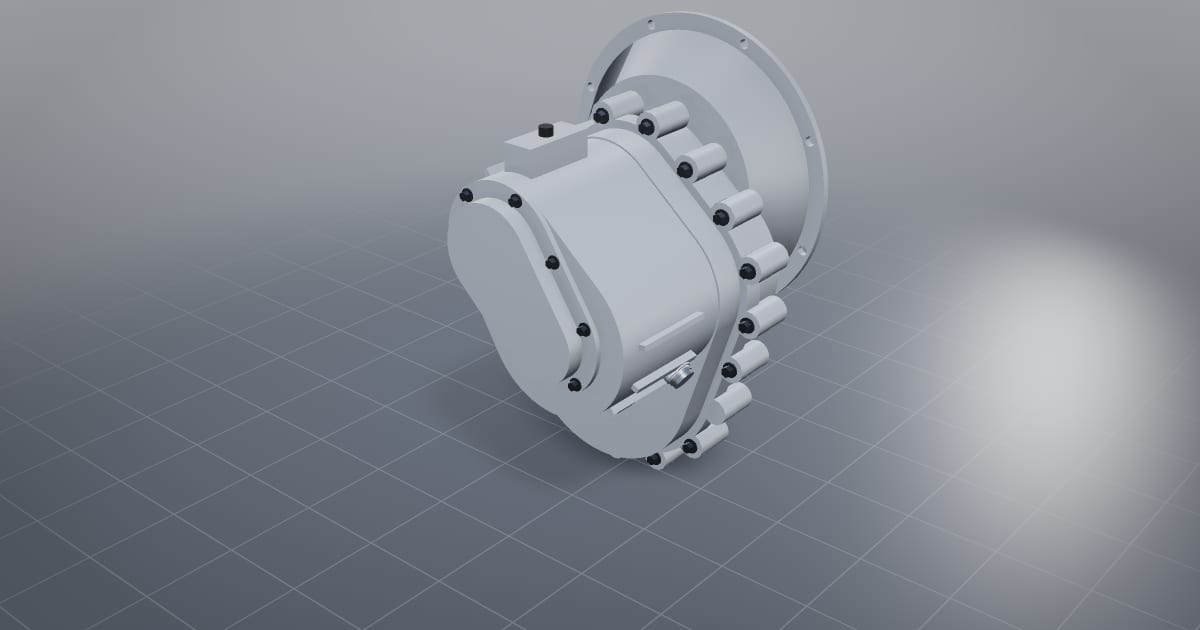
What automotive teams do with NativeCAD
- Model drivelines that actually move. Gears, mates and bearings are solved, not keyframed.
- Run tolerance stacks and fastener audits across a whole assembly and get a list of what will fail in production.
- Design thermal hardware for electric and fuel-cell powertrains and check duty, pressure drop and leak paths.
- Close DFM findings automatically for machined, moulded, sheet-metal and printed parts.
- Exchange files with your customer's CAD through STEP AP242, Parasolid, IGES and SLDPRT.
A five-speed transaxle, checked the way a checker would
The checks your checker forgets runs tolerance stacks and a fastener audit on a five-speed car transaxle. The results are the kind you want before tooling:
- 0 clashes across 620 touching part pairs.
- One stack is out of spec in 99.96% of simulated builds as drawn, and 0% with the spacer picked at assembly.
- 4 of 4 planted fastener mistakes caught, none missed, no false alarms.
- 43.42 N·m worked out per VDI 2230 on each of the 16 case flange bolts. The service manual says 44 ± 5 N·m.
Differentials and engines with real kinematics
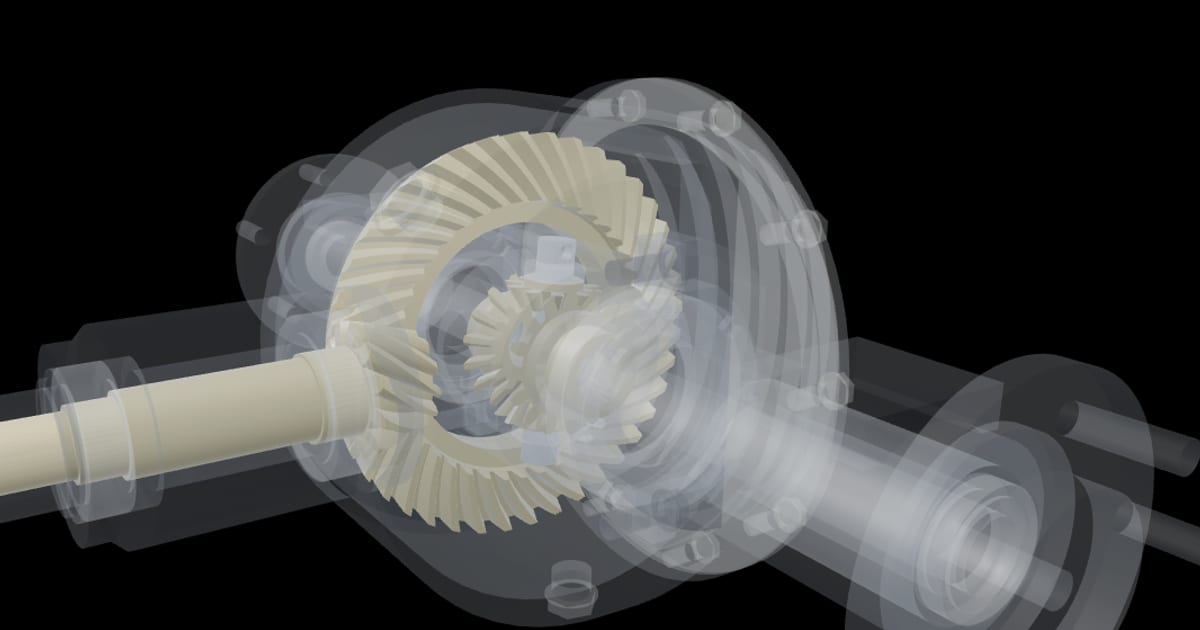
The rear differential is a 3.73:1 spiral bevel set, 41:11 teeth, 59 parts with every bolt modelled. Nothing is keyframed: turn the pinion and the mates move everything else, including the case where one wheel is held. The V12 engine is a 6.0-litre 60° DOHC unit at 89 × 80.4 mm bore and stroke (6002 cc) that runs live with a cutaway, an exploded view and a crank-angle dial. Both are useful as proof that a text-driven model can carry the part count and motion of real powertrain hardware.
Thermal parts for electric and hydrogen powertrains
The printed gyroid heat exchanger removes 515 W against 482 W required, at 2.7 kPa air-side pressure drop inside a 5.0 kPa budget, with 0 leak paths between the air and coolant networks, in a 696 g AlSi10Mg part. The hydrogen fuel-cell precooler was generated from a text brief and removes 10.3 kW at 109 g/s of air in a 4.06 kg one-piece print, checked for thermal, structural, vibration and printability.
DFM findings that close themselves
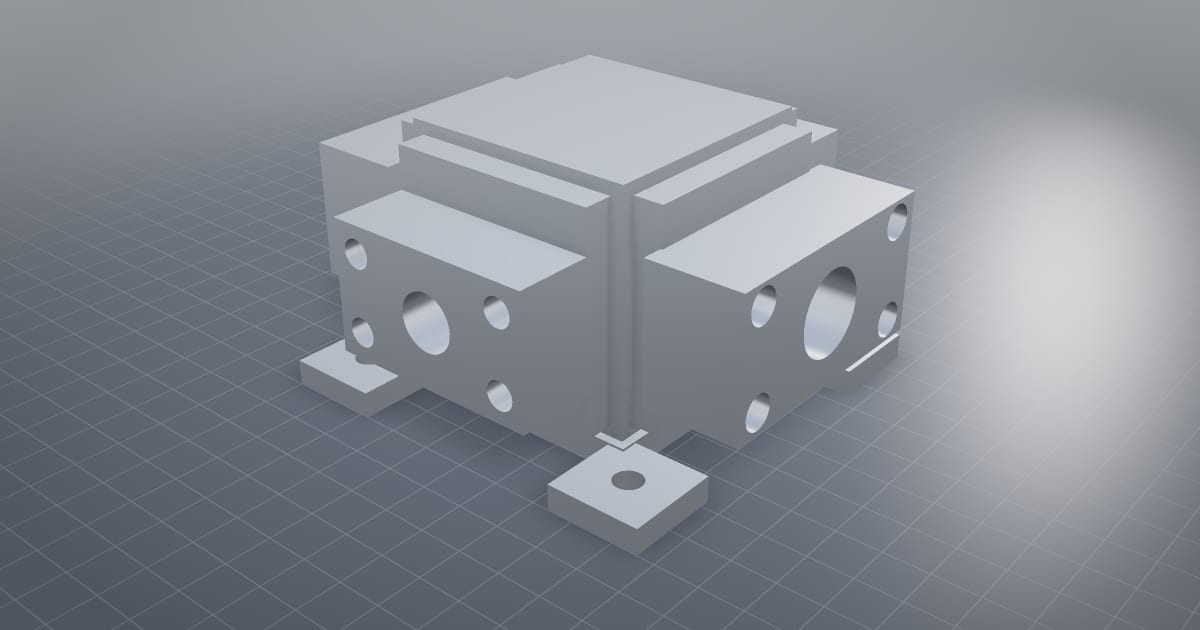
In the DFM design loop, the manufacturability checker proposes the remedy and the assistant applies it. Eight of eight parts passed in three iterations or fewer across machining, injection moulding, sheet metal and additive. The knowledge packs include automotive, motorsport and race-engine rules.
What to ask your assistant
Import this housing STEP and run a tolerance stack from the bearing seat to the cover face.
    Audit every fastener in the assembly: thread engagement, clearance holes, torque.
    Design a coolant manifold for these four ports and check pressure drop at 12 L/min.
    Run the injection moulding checks on this bracket and fix what fails.
Questions automotive engineers ask
Can NativeCAD run a tolerance stack-up analysis?
Yes. The transaxle demo runs statistical tolerance stacks across the assembly and reports the share of simulated builds that fall out of spec, then shows the fix.
Does NativeCAD work with our customer's CAD system?
NativeCAD reads and writes STEP AP242 and reads Parasolid, IGES, SAT and SolidWorks SLDPRT. 150 of 150 exported STEP files were read back by an independent CAD kernel. See STEP interoperability.
What does NativeCAD cost?
A NativeCAD MCP / Modeler seat is $200 per seat per year, or $20 per seat per month, with no metered usage. The evaluation needs no key and no sign-up; export, save and import need a seat key. See pricing.
Does my geometry leave my computer?
NativeCAD runs on your own machine: the kernel and solvers run locally and licence validation is fully offline. Files opened in the browser modeler are never uploaded. Your AI assistant sees what you ask it to work on, under your agreement with its provider.
NativeCAD in other industries
- NativeCAD for Drone Manufacturers: Airframe, Airflow and Every Revision Checked
- NativeCAD for Motorsport: More Design Iterations Between Races
- NativeCAD for Aerospace and Turbomachinery: Blades, Casings and Qualification Reports
- NativeCAD for Robotics and Weld Cell Integrators: Program the Cell From the CAD Model
- NativeCAD for CNC Job Shops: From the Customer's Drawing to a Checked Solid
- NativeCAD for Sheet Metal Fabricators: Flat Patterns, Bend Checks and Drawings by Conversation
- NativeCAD for Metal Additive Manufacturing: Design for the Printer, Then Prove the Part
- NativeCAD for 3D Printing Services and Product Designers: Fuller Builds, Parts That Work Off the Bed
- NativeCAD for Foundries and Casting: Part In, Mould Out
- NativeCAD for Electronics Hardware Teams: Check the Board and Fit the Enclosure Before You Build
- NativeCAD for Furniture Makers and Woodworkers: A Desk Designed in Ten Messages
- NativeCAD for Game Studios and 3D Asset Teams: Engineering-Grade Models as Runtime Assets
- NativeCAD for Simulation Teams: FEA and CFD Set Up and Run by the Agent That Built the Part
- NativeCAD for Defense and Regulated Manufacturing: AI-Built Parts Inside Your Own Boundary
NativeCAD is CAD, FEA and CFD software your AI assistant drives over MCP, from Claude, Cursor or your own agent, and in the browser. Every part is an exact B-rep solid that exports as STEP AP242. See what it does, browse every demo, check pricing, or install it.