A casting job starts with a part someone else designed and a question: can this be poured, and what will the tooling cost? Short runs and prototypes often die on that answer. NativeCAD is CAD software driven by your AI assistant, with mould generation, draft and castability checks built in, so the answer comes with geometry attached.
What foundries do with NativeCAD
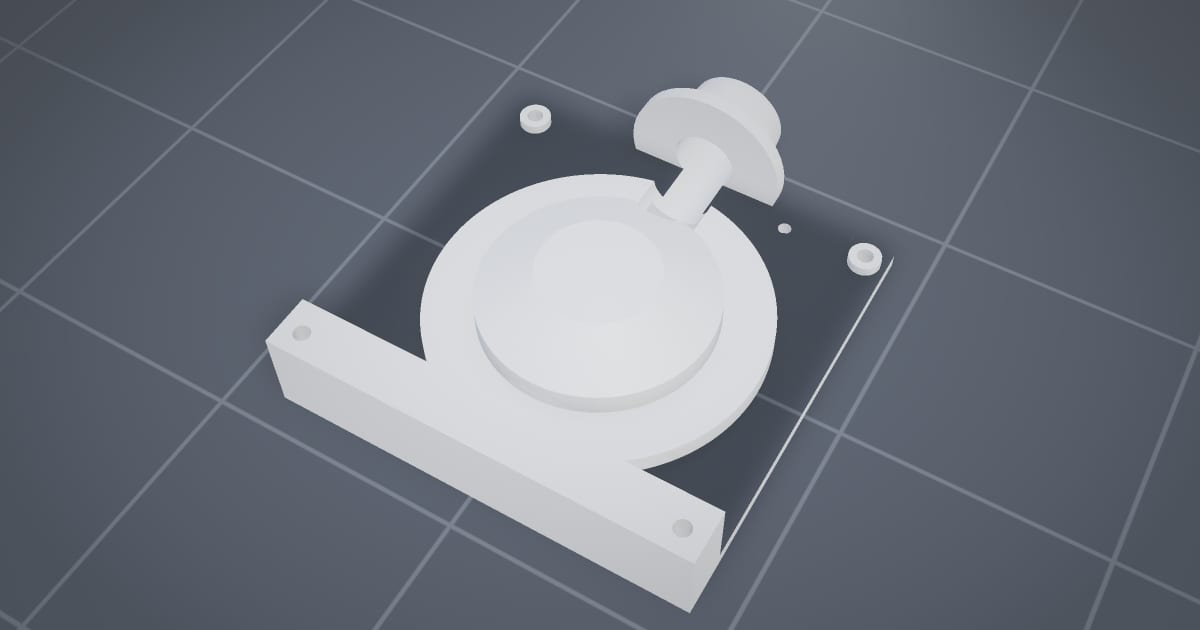
- Generate a two-half mould from a part ready to print in ceramic.
- Check castability before quoting: draft, wall thickness, undercuts.
- Add draft and fix findings by conversation.
- Work out charge weight from the exact solid volume.
- Compare a cast version of a part against printed, machined and welded ones.
Three parts, three printable moulds
Part in, printable casting mould out takes three parts and turns each into a printable two-half ceramic mould in one call. The shell follows the part, so it uses 47.1% less ceramic than a block mould. One example pours a 1,231 g A356 charge for 109 medallions, and 2 moulds fit on one build plate. For a foundry this is tooling for a short run without a pattern shop.
Castability as a design constraint
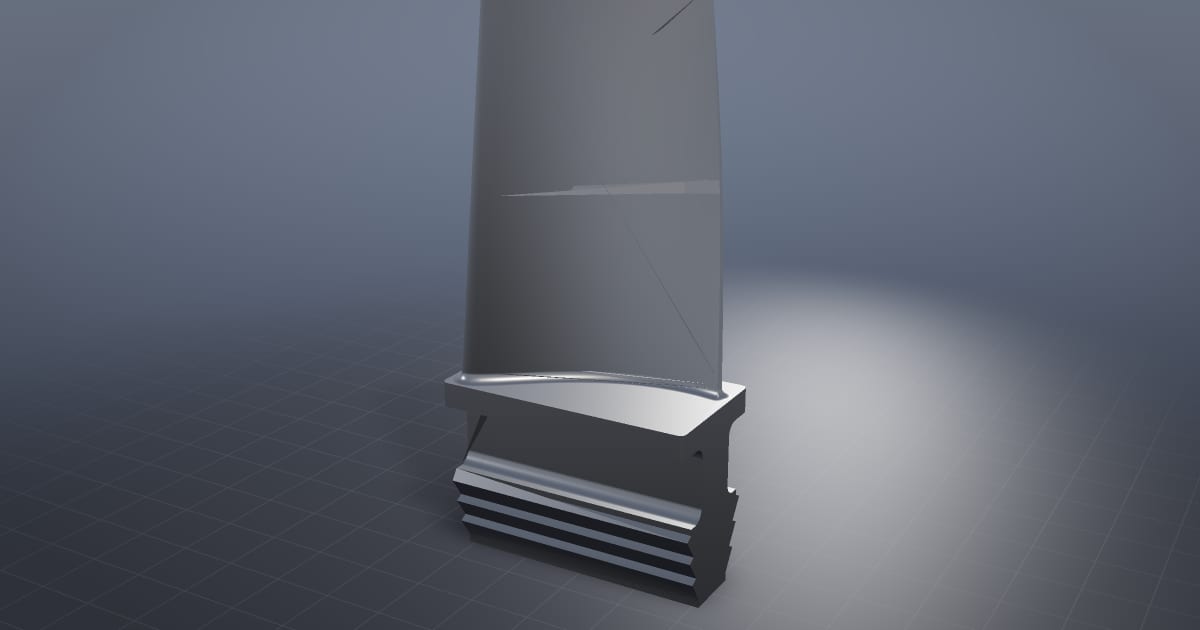
In the turbine blade demo, castability is one of four solvers boxing in the design, next to rim load, tip clearance and aero. The nominal blade fails castability, and the picked design point passes all four. The lesson for any cast part is the same: check the pour while the shape can still change.
The cast version of an optimised part
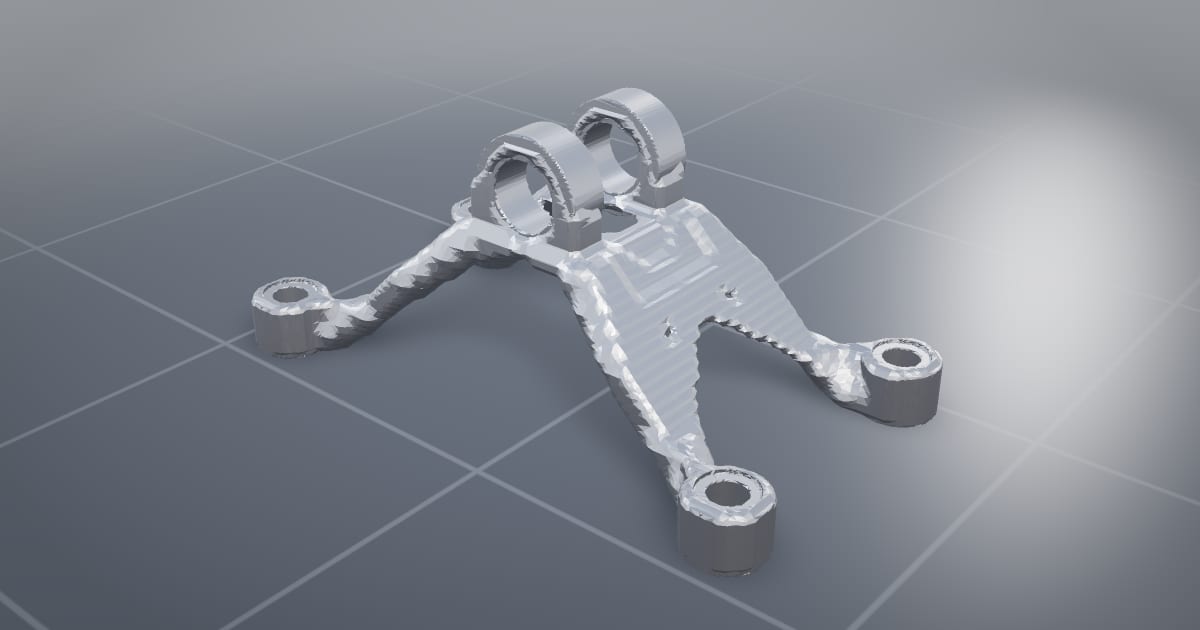
Optimised shapes are usually shown printed. The GE jet engine bracket comes in versions to print, cast, machine and weld, all carrying the four challenge loads, starting from a 2.04 kg titanium original. A foundry can offer the cast version of a customer's lightweight design with the load check already done.
Moulded plastic parts get the same treatment
The DFM design loop runs injection-moulding rules alongside machining, sheet metal and additive. The checker names the remedy and the assistant applies it: 8 of 8 parts pass in three iterations or fewer. Draft, rib and wall findings are fixed in the model, not listed in an email.
What to ask your assistant
Make a two-half mould for this part with a 6 mm shell, pouring cup and vents.
    Check this housing for draft and minimum wall for sand casting.
    Add 2 degrees of draft to every face that needs it and show me what changed.
    What is the pour weight in A356 including the gating?
The DFM knowledge packs hold 34 sector packs with 1973 entries. For printing the moulds themselves, see NativeCAD for metal additive manufacturing.
Questions foundries and casting engineers ask
Can NativeCAD generate a casting mould from a CAD part?
Yes. One call turns a part into a printable two-half ceramic mould. In the public demo the conformal shell uses 47.1% less ceramic than a block mould.
Does NativeCAD check draft angles and wall thickness?
Yes. It checks draft, wall thickness and undercuts for casting and moulding, and the assistant can apply the fix, such as adding draft to the faces that need it.
What does NativeCAD cost?
A NativeCAD MCP / Modeler seat is $200 per seat per year, or $20 per seat per month, with no metered usage. The evaluation needs no key and no sign-up; export, save and import need a seat key. See pricing.
Does my geometry leave my computer?
NativeCAD runs on your own machine: the kernel and solvers run locally and licence validation is fully offline. Files opened in the browser modeler are never uploaded. Your AI assistant sees what you ask it to work on, under your agreement with its provider.
NativeCAD in other industries
- NativeCAD for Drone Manufacturers: Airframe, Airflow and Every Revision Checked
- NativeCAD for Automotive: Drivelines, Tolerance Stacks and Thermal Parts Your AI Can Check
- NativeCAD for Motorsport: More Design Iterations Between Races
- NativeCAD for Aerospace and Turbomachinery: Blades, Casings and Qualification Reports
- NativeCAD for Robotics and Weld Cell Integrators: Program the Cell From the CAD Model
- NativeCAD for CNC Job Shops: From the Customer's Drawing to a Checked Solid
- NativeCAD for Sheet Metal Fabricators: Flat Patterns, Bend Checks and Drawings by Conversation
- NativeCAD for Metal Additive Manufacturing: Design for the Printer, Then Prove the Part
- NativeCAD for 3D Printing Services and Product Designers: Fuller Builds, Parts That Work Off the Bed
- NativeCAD for Electronics Hardware Teams: Check the Board and Fit the Enclosure Before You Build
- NativeCAD for Furniture Makers and Woodworkers: A Desk Designed in Ten Messages
- NativeCAD for Game Studios and 3D Asset Teams: Engineering-Grade Models as Runtime Assets
- NativeCAD for Simulation Teams: FEA and CFD Set Up and Run by the Agent That Built the Part
- NativeCAD for Defense and Regulated Manufacturing: AI-Built Parts Inside Your Own Boundary
NativeCAD is CAD, FEA and CFD software your AI assistant drives over MCP, from Claude, Cursor or your own agent, and in the browser. Every part is an exact B-rep solid that exports as STEP AP242. See what it does, browse every demo, check pricing, or install it.