A simulation team is usually the bottleneck in a design loop, and not because solving is slow. The time goes into repairing imported geometry, defeaturing, meshing and setting up the same load cases again for revision C. NativeCAD is CAD, FEA and CFD software driven by your AI assistant. Because the assistant owns the geometry, it also owns the setup: a change to the part reruns the analysis.
What analysts do with NativeCAD
- Run stress and modal analysis with the CalculiX solver, set up by the agent.
- Run CFD: compressible flow with SU2 and large-eddy simulation on one GPU.
- Couple solvers: flow, combustion chemistry and transients in one loop.
- Defeature and heal geometry for meshing.
- Sweep designs across every machine on the team and get the same answer on each.
FEA with no card deck to learn
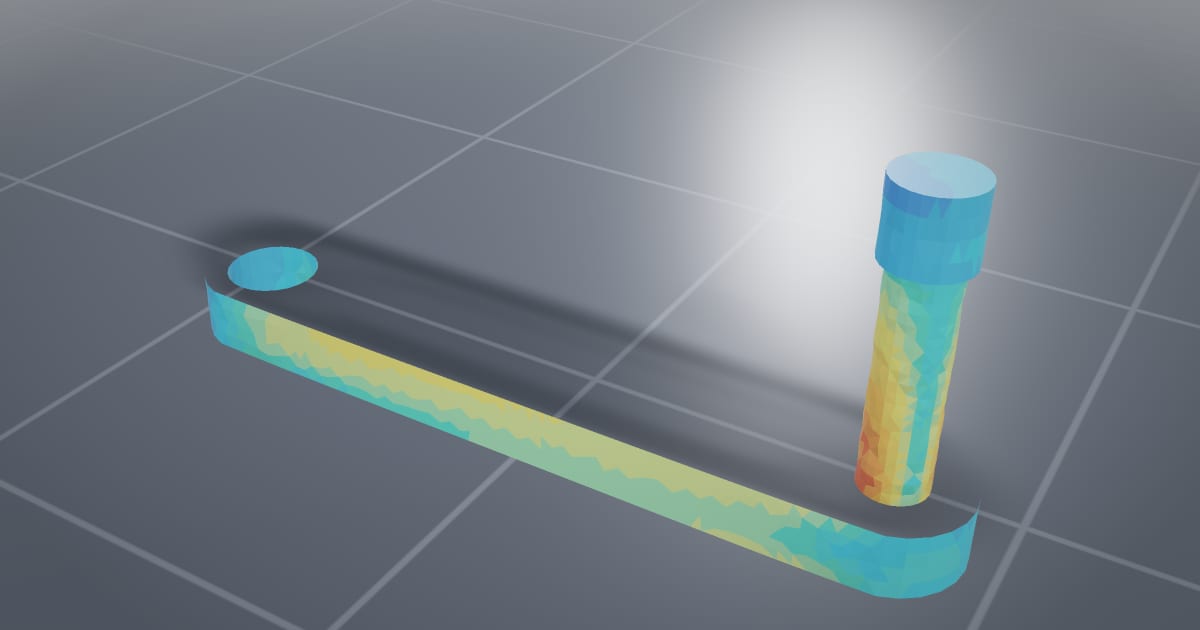
NativeCAD FEA uses the CalculiX 2.21 solver with C3D10 tetrahedra. A cantilever's six modes land within 0.9 % of beam theory. A bicycle crank arm comes out 25.6 g lighter, 9 % down, at a safety factor of 1.5 or more. No solver licence, no meshing session, no card deck to learn: you state the load case, and the report comes back against your requirement.
CFD on the hardware you have
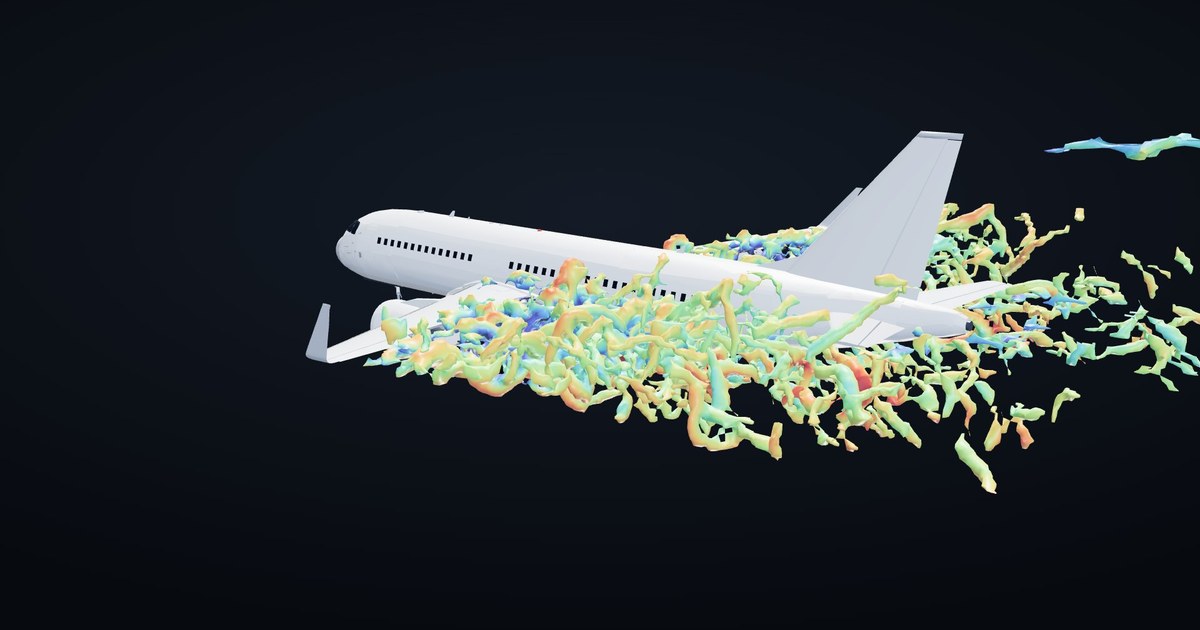
The A320neo airflow is a large-eddy simulation at approach, CONF FULL, gear down, 136 kt and 6° angle of attack, solved on a single RTX 5060 with 8 GB in about 6.6 minutes. The quadcopter forward-flight run is a lattice-Boltzmann overset simulation with the props spinning at the simulated rpm.
Flow, chemistry and a start-up in one loop
Simulation coupling runs a 300 N jet engine with SU2 compressible CFD, Cantera combustion and a simulated start-up, and lands at exit Mach 0.868 and 298.1 N of thrust against the 300 N target. The turbine blade is boxed in by four solvers at once: castability, rim load, tip clearance and aero.
Reports with a requirement and a number
The NASA Rotor 67 blade qualification solves prestressed modes, a Campbell diagram, forced response and Goodman safety factor, and reports a stage minimum safety factor of 1.19 against the required 1.5. The gyroid heat exchanger reports 515 W removed against 482 W required. Each result is stated against its requirement.
Geometry prep that is not manual
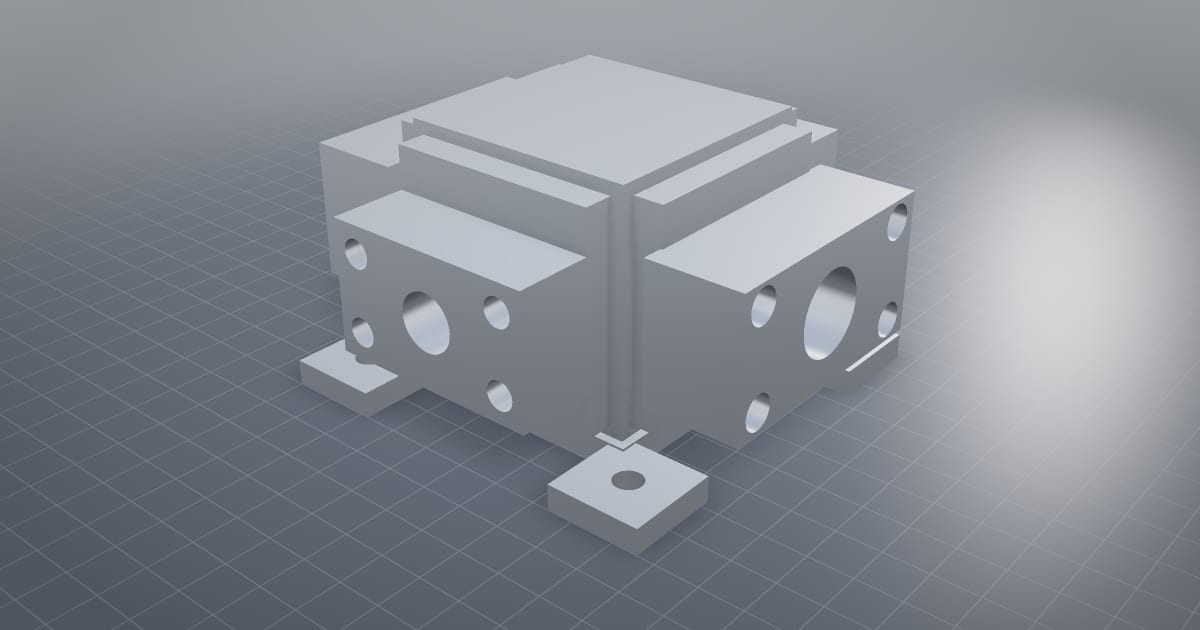
Defeaturing removes holes, fillets and bosses under size thresholds and heals the solid watertight. In the live modeler, the volume mesh demo shows a tetrahedral mesh built from the solid. Imported files in STEP, Parasolid, IGES or SLDPRT go through the same path.
Design sweeps across every machine, same answer on each
NativeCAD Teams spreads a sweep across the computers your team already has, with 0 machines in charge and no cloud server. In recorded runs of a 24-candidate bracket sweep, 192 solves matched to every digit wherever they ran, and 8 of 8 runs named the same winner. For a consultancy that is overnight capacity without renting a cluster, and results a client can reproduce.
What to ask your assistant
Fix the bolt holes, apply 2 kN to the lug and report peak von Mises stress and safety factor.
    Find the first six natural frequencies and tell me which are near 120 Hz.
    Remove every fillet under 2 mm and remesh.
    Run this at five wall thicknesses and plot mass against peak stress.
Questions simulation engineers ask
Which FEA solver does NativeCAD use?
NativeCAD runs linear static stress and modal analysis with the open-source CalculiX solver using C3D10 tetrahedral elements. The AI assistant sets up the mesh, loads and constraints and reads the results back.
Can NativeCAD run CFD on a normal workstation?
Yes. The A320neo large-eddy simulation was solved on a single RTX 5060 graphics card with 8 GB of memory in about 6.6 minutes.
What does NativeCAD cost?
A NativeCAD MCP / Modeler seat is $200 per seat per year, or $20 per seat per month, with no metered usage. The evaluation needs no key and no sign-up; export, save and import need a seat key. See pricing.
Does my geometry leave my computer?
NativeCAD runs on your own machine: the kernel and solvers run locally and licence validation is fully offline. Files opened in the browser modeler are never uploaded. Your AI assistant sees what you ask it to work on, under your agreement with its provider.
NativeCAD in other industries
- NativeCAD for Drone Manufacturers: Airframe, Airflow and Every Revision Checked
- NativeCAD for Automotive: Drivelines, Tolerance Stacks and Thermal Parts Your AI Can Check
- NativeCAD for Motorsport: More Design Iterations Between Races
- NativeCAD for Aerospace and Turbomachinery: Blades, Casings and Qualification Reports
- NativeCAD for Robotics and Weld Cell Integrators: Program the Cell From the CAD Model
- NativeCAD for CNC Job Shops: From the Customer's Drawing to a Checked Solid
- NativeCAD for Sheet Metal Fabricators: Flat Patterns, Bend Checks and Drawings by Conversation
- NativeCAD for Metal Additive Manufacturing: Design for the Printer, Then Prove the Part
- NativeCAD for 3D Printing Services and Product Designers: Fuller Builds, Parts That Work Off the Bed
- NativeCAD for Foundries and Casting: Part In, Mould Out
- NativeCAD for Electronics Hardware Teams: Check the Board and Fit the Enclosure Before You Build
- NativeCAD for Furniture Makers and Woodworkers: A Desk Designed in Ten Messages
- NativeCAD for Game Studios and 3D Asset Teams: Engineering-Grade Models as Runtime Assets
- NativeCAD for Defense and Regulated Manufacturing: AI-Built Parts Inside Your Own Boundary
NativeCAD is CAD, FEA and CFD software your AI assistant drives over MCP, from Claude, Cursor or your own agent, and in the browser. Every part is an exact B-rep solid that exports as STEP AP242. See what it does, browse every demo, check pricing, or install it.