A320neo airflow, simulated on one gaming GPU
A large-eddy simulation of the air around our A320neo model, solved on a single RTX 5060 (8 GB) in about 6.6 minutes. The coloured surfaces are the vortices the aircraft sheds, shaded by how fast the air is moving.
Turn it yourself
The same results as a live 3-D scene: our A320neo model, shaded, inside its vortex surfaces at full resolution. Drag to orbit, scroll or pinch to zoom, pick a camera, and switch between the two flight cases. The camera stays where you left it, so the two wakes line up.
Approach, CONF FULL, gear down, 136 kt, angle of attack 6°. Half the aircraft is solved, with a symmetry plane at the centreline; the other side is its mirror image.
What was simulated
Half of our A320neo model, with a symmetry plane at the centreline: 34.5 million cells, each 12.5 cm across, in one uniform grid of free air around the aircraft. The geometry is the airliner from our Space Program, built on the NativeCAD kernel, with its slats, flaps and landing gear set for each case.
- Approach. 136 kt at 6° angle of attack, with the slats and flaps at CONF FULL, the gear down and the engine running: air is drawn in at the fan face and blown out of the nozzle at approach thrust.
- Clean wing. 200 kt at 6° angle of attack, with the slats and flaps retracted and the gear up.
How it was solved
A lattice-Boltzmann large-eddy simulation (D3Q19) in the NativeCAD CFD package, running on the graphics card through WebGPU. The large, energetic eddies are computed directly on the grid and the smaller ones are modelled. The same scheme also runs on the CPU as a reference, and the two agree to within 3 × 10⁻⁶.
The solver is checked on the classic test case, the flow past a sphere: its drag comes out within 3.1 % of the published correlation.
What this page claims: the flow field and the speed of the solve. It quotes no lift or drag for the aircraft, because the forces need a wall model that is still in development.
How fast
About 2,137 million cell updates a second on one RTX 5060 (8 GB). A whole flight case, from still air to the flow on this page, takes about 6.6 minutes for the approach and 5.5 minutes for the clean wing. The whole grid fits in the card's memory: no cluster, no queue.
More demos
All demos →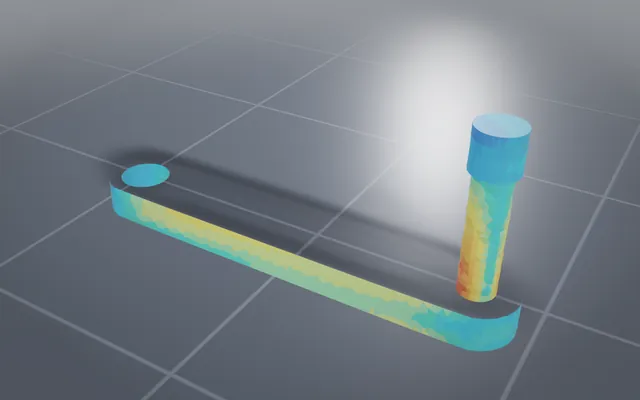
Finite-element analysis your agent can run
Stress and vibration results from the same AI session that built the part, with the peak and its margin.
6 designs solved in FEA DFM design loop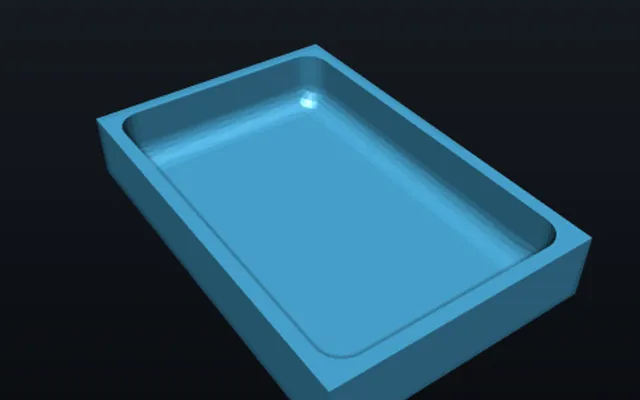
The DFM design loop closes its own findings
Parts that break a machining, moulding, sheet or print rule come back fixed from the checker's own advice.
8 of 8 parts fixed PCB certification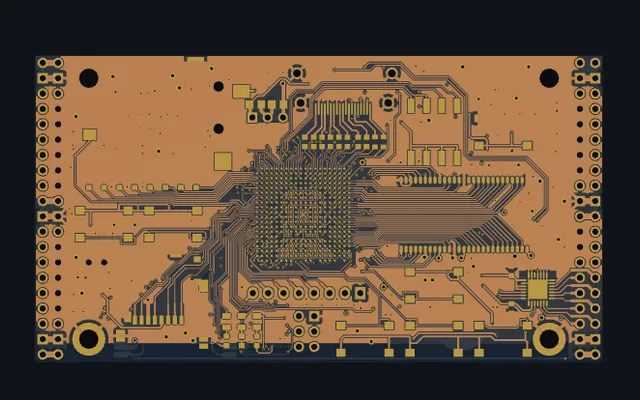
Pass PCB qualification before you build
One run over your board gives a UL and IPC readiness report, with the one change that fixes each finding.
5 checks pass · 1 fail Drawings to STEP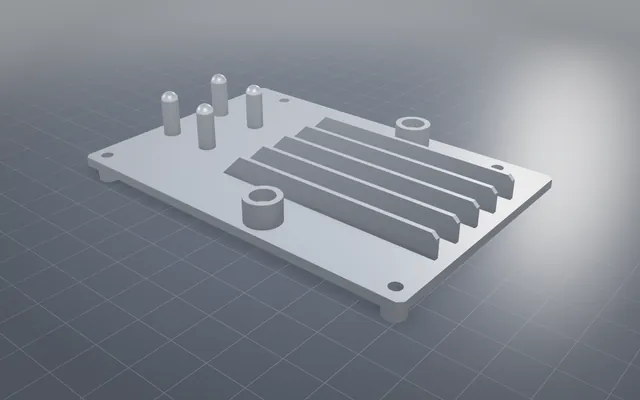
Manufacturing drawings in, STEP out, checked against the original
Real manufacturing drawings become exact 3D models, each matched against the official model.
6 of 6 NIST parts matchedBuild your own part with NativeCAD
Free for education and makers with a registered key · $200 per seat per year · Kernel SDK for products.