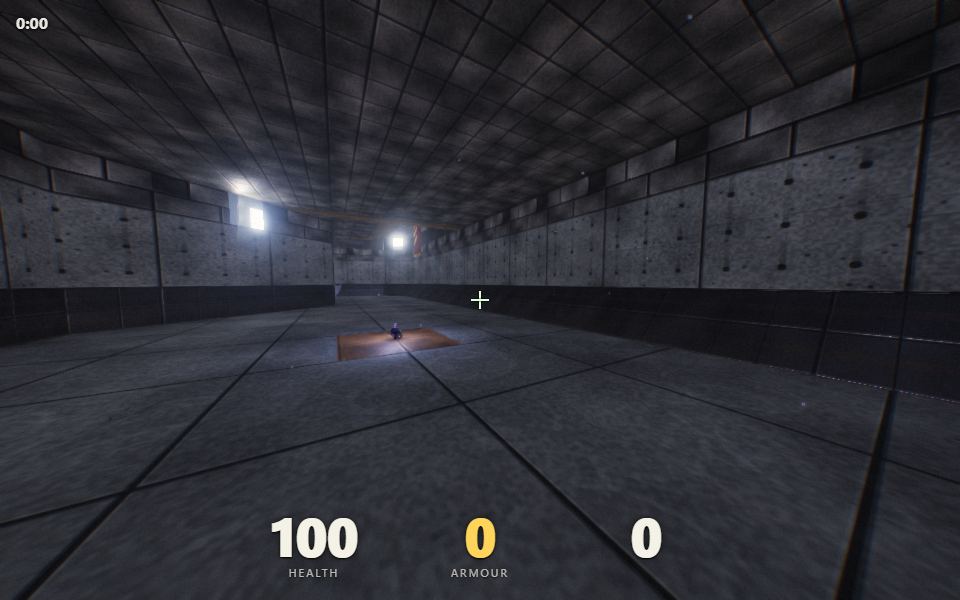
Textures
14 materials are painted on canvases in the page when the game starts. No texture file is downloaded.
NativeCAD Arena is a browser deathmatch game whose map is 991 NativeCAD B-rep bodies, proven sealed before any game data is made from them, with every check pinned in Pinpoint on the part it is about.
A classic deathmatch map layout with arena-shooter movement, 9 weapons, 37 pickups, 3 jump pads and bots that find their way on a graph baked from the same data. It needs a keyboard and a mouse.
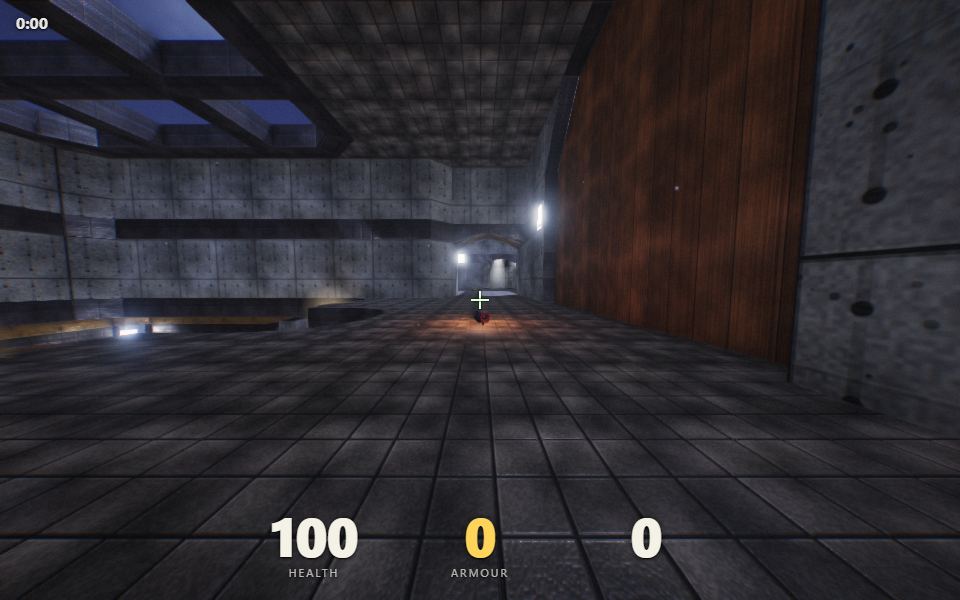
The game loads when you press Play. Click inside it to take the mouse; Esc gives it back.
WASD move Space jump Ctrl crouch Mouse 1 fire 1-9 / wheel weapons C gauntlet R shotgun G grenades E rockets Q lightning F railgun V plasma Enter use item X inspect weapon F11 full screen F8 field report Tab scores Esc menu
The game's menu also has Host a game and Join. Multiplayer passes its tests on a simulated network; two machines through the lobby have not been tried yet, so that goal is still open in the project below.
Pinpoint is NativeCAD's project viewer: the model, the goals it started from, and a pin for every check. This is the arena's own project, replayed in your browser. The map is shown as CAD data, each body its own part; the pins are the checks that had to pass before the game data was made.
Click a part to read its record: where it came from, what it is made of and what was checked on it.
Groups. 13 groups. The sky and the outer hull are hidden at first so you can see in; Sealed puts them back. The 71 clip volumes and 3 jump-pad triggers are volumes, not things you see in the game: turn them on from the group buttons.
Overlays. Flood is the leak test: the surface of the space reached from the 9 spawns. Jump pads draws one flight the gate flew from each pad, to its checked landing. Bot graph is the 2,444 places and 17,303 links the bots plan on. Hulls outlines what stops a player or a shot. Break it removes one sky body and shows what the gate then reports.
Pins. 21 are shown: the 20 checks of the latest run and 0 open defect a person pinned by hand. 7 carry a point on the model; a check about the whole game sits on the part Pinpoint filed it under. The project holds 40 pins in all, the rest from an earlier run of the same checks.
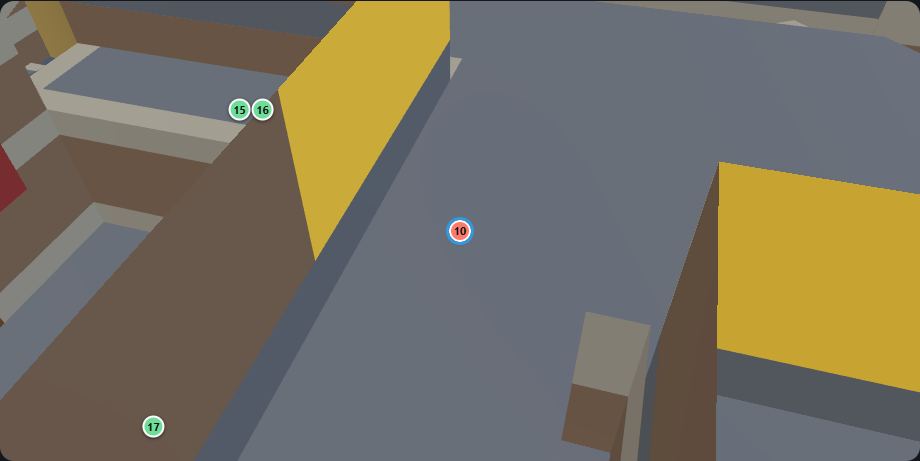
Pinpoint is where the map was looked at and where its problems were worked, not only where the checks land. This is one issue as the project recorded it, pin 10 in the list above.
2026-11-10 05:39 UTC
Looking round the streamed model, the owner put a defect pin on the wall walls_0728: “lots of Z fighting walls - need to boolean it”. Two solids had been drawn in the same place, and the viewer drew their faces in turn.
86 pairs as drawn
The gate gained a check for it: no overlapping solids, which intersects every pair of solids whose boxes touch. On the map as drawn it is red: 86 pairs of solids share 4,870,856 cubic units.
67 brushes cut back
Each brush is cut back by the ones before it, along their planes, and the convex pieces are kept: 67 brushes now stand as 109 bodies, and none of the 768 solids shares volume with another. All 991 of 991 bodies still pass the kernel's full check.
42 minutes, pin to close
The check passes and sits on the model with the rest of the run (pin 13); the defect was closed in Pinpoint at 2026-11-10 06:21 UTC. The person who saw the problem and the check that proves it gone are in one record, on the part they are about.
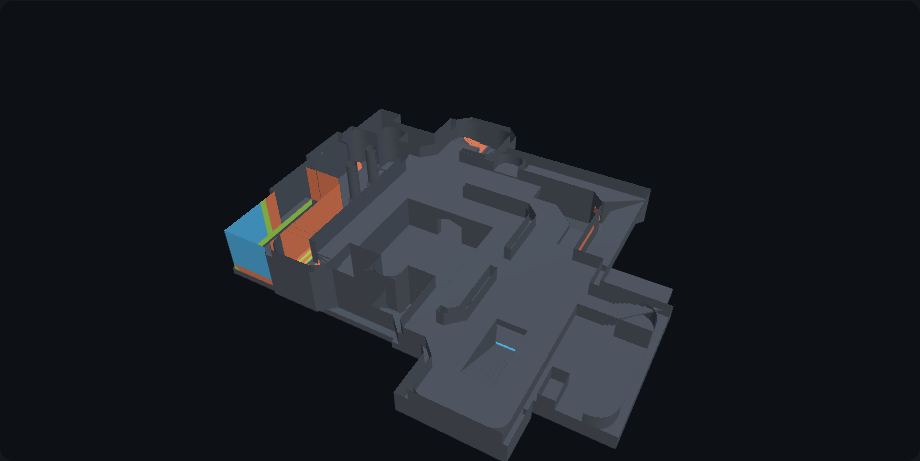
800 brushes · 147 curved patches
A classic deathmatch map layout as text: convex brushes cut by planes, and grids of curve control points.
Guards against: a brush whose planes do not close is refused by name.
844 solids · 147 B-spline sheets
One closed convex solid per brush or cut piece, with plane faces over shared edges, and one exact B-spline sheet per patch. The worst solid differs from its own convex volume by 2.0e-11 of it. As drawn, 86 pairs of brushes overlapped; 67 brushes were cut back into 109 convex pieces, so no two solids share volume.
Guards against: geometry that only looks right. 991 of 991 bodies pass the kernel's full check.
10 of 10 checks pass
768 solids must close the play space. It is cut into 8-unit cells and flooded from every spawn: 10,602,605 cells, and none touches the edge, so no opening wider than 16 units leads outside. Then spawns, items and jump pads are checked in that space.
Guards against: a leak. With the body sky_0181 removed the gate goes red and reports the way out, 67 cells long.
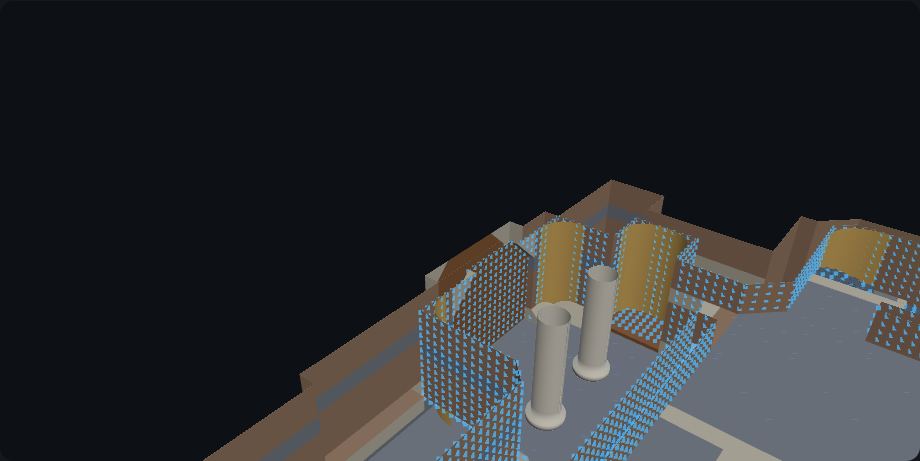
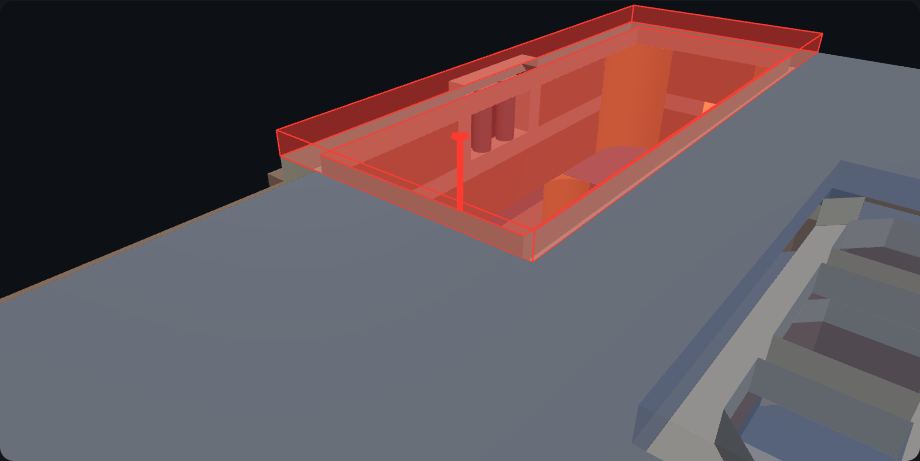
5,459 hulls · 36,443 triangles
From the checked bodies only: 839 brush hulls and 4,620 wedges under the curved patches, the drawn mesh in 20 material chunks, a 2,048 × 2,048 lightmap, and the bots' graph.
Guards against: game data from an unchecked map. The bake refuses a map whose gate is red.
9 weapons · 37 pickups · 9 spawns
The game loads that data and nothing else: it collides with the hulls, draws the mesh, and its bots walk the graph, 10 of whose links ride the 3 jump pads.
Guards against: drift. The game's own tests are pins in the project too.
Borrowed: the layout, and 3 recorded gunshots that the Vanguard mode's guns play over their own synthesised sound (public-domain recordings, credited here), and the bots' radio, 6 files of speech rendered offline by an open speech model. Every other sound is synthesised in the browser. Image files shipped with the game: 25, of which 10 are lightmaps computed by the bake and 15 are key art and a map overview rendered from the game's own data.
14 materials are painted on canvases in the page when the game starts. No texture file is downloaded.
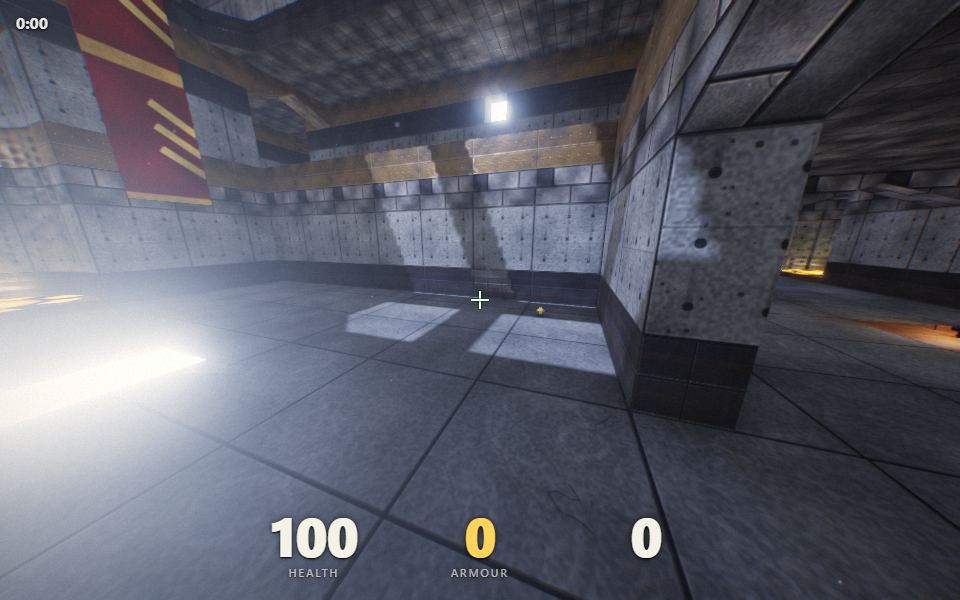
Computed in the bake at 8 units a texel: 145 lamp emitters from the map's lamp faces, a moon and a night sky through the sky bodies, and 15 glows at pickups and pads.
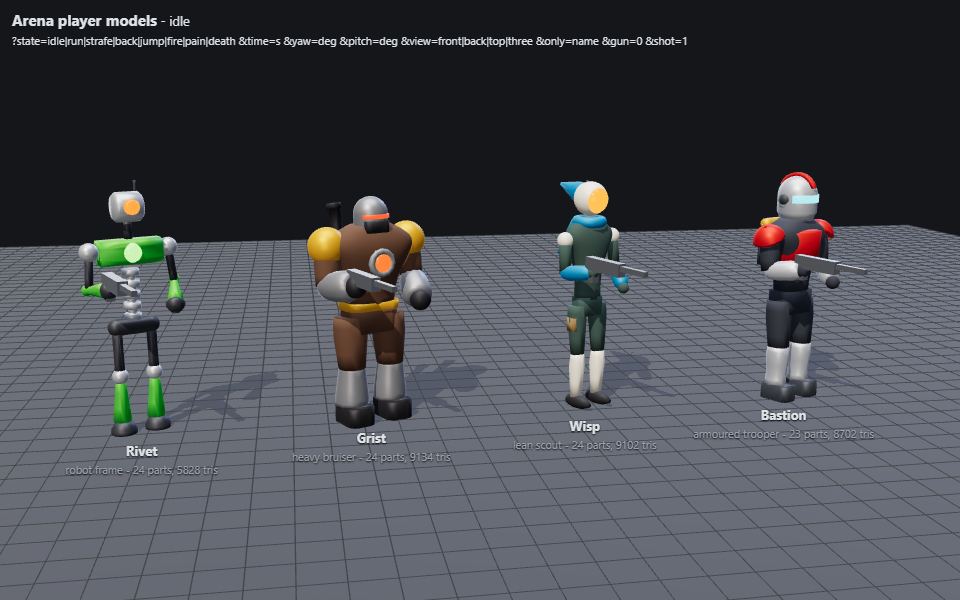
4 characters, each a set of kernel solids on a jointed frame. Turn them round.
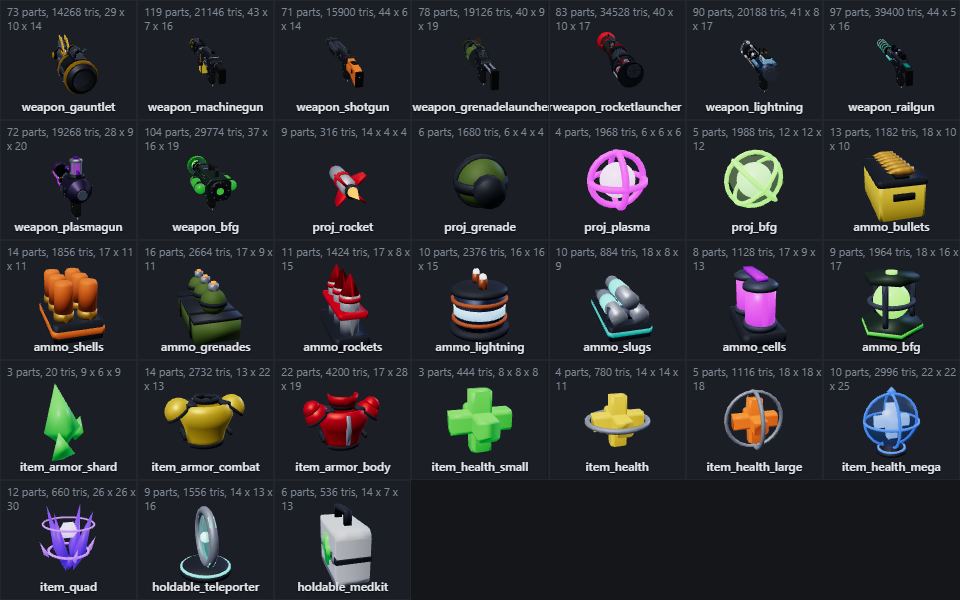
31 models, every part a closed kernel solid. See them all.
Synthesised in the page as you play: shots, pickups, jump pads, footsteps. There is no audio file to fetch.
The model here is every body of the build, 0.9 MB in all: the curved sheets, columns and volumes as the kernel tessellated them, and each solid as its faces less the parts another solid lies against (2,544 faces wholly covered, 350 trimmed), the same pieces the game draws, so no two faces fight for one place. Goals and pins are the project's record as Pinpoint holds it; where a recorded line named the map's source, those words are replaced and the row is marked. Lengths are in the map's units or in model millimetres, as each check recorded them. What the gate cannot see: a crack narrower than one 8-unit cell.
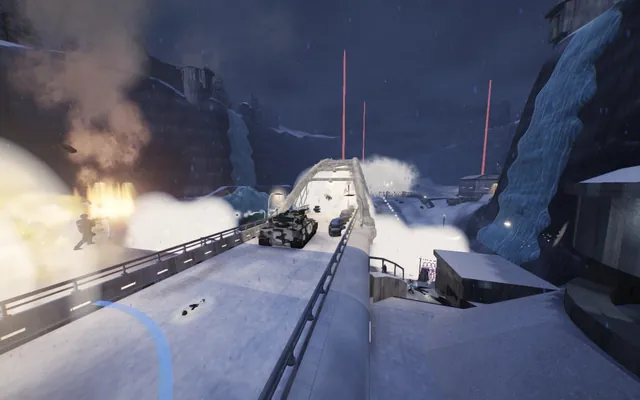
Shields, vehicles and capture the flag on four maps of our own, each proven by a gate and pinned in Pinpoint.
64 checks pinned in Pinpoint FEA loop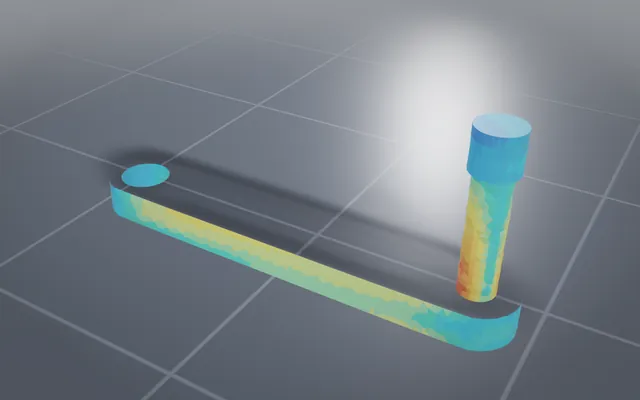
Stress and vibration results from the same AI session that built the part, with the peak and its margin.
6 designs solved in FEA DFM design loop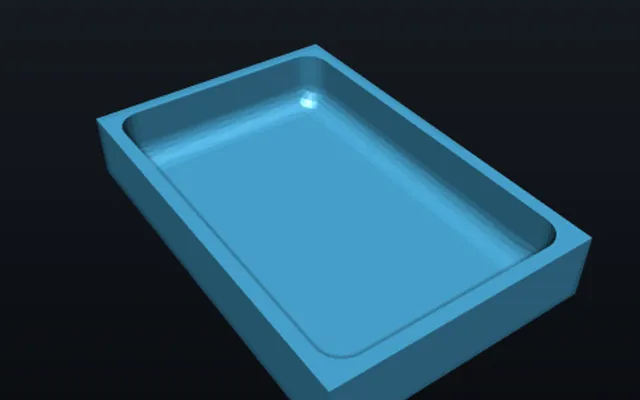
Parts that break a machining, moulding, sheet or print rule come back fixed from the checker's own advice.
8 of 8 parts fixed Drawings to STEP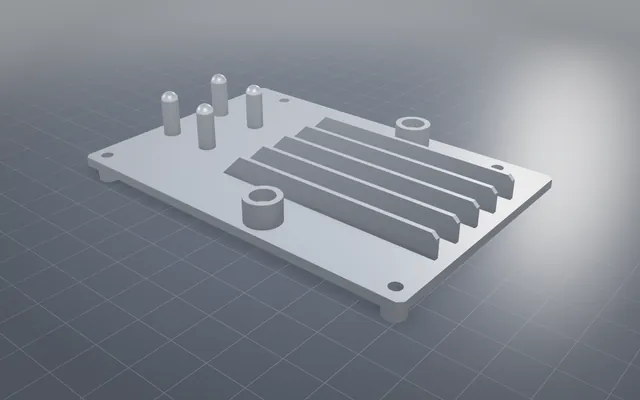
Real manufacturing drawings become exact 3D models, each matched against the official model.
6 of 6 NIST parts matchedTry it free with the keyless evaluation · $200 per seat per year · Kernel SDK for products.