The crown jewels of CAD. Now yours to run.
Models that survive a late change. Imported parts you can edit as if you had drawn them. Surfaces smooth enough for a car body. For decades these came only with a licensed commercial kernel, at its price and on its terms. NativeCAD builds every one of them itself, and you can try them right here before you install anything.
Six of the nine run live below, on the same kernel build the modeler uses. Three are shown from recorded runs, and each one says which it is.
Names that survive edits live
Every face is named after the feature that made it and the part it played, so later features find the same face again after you change earlier ones.
What you get. Change a dimension late in the project and the model updates instead of breaking. No afternoon lost re-attaching features one by one.
Why it matters. Every history-based CAD system has to solve this problem, and it is why one small edit can break everything built after it. A dependable answer has long been the private property of the established commercial systems, each keeping its method to itself.
Try it. Change the plate, the boss or the top face itself. The pads keep landing on the face they named, and a reference to a face that no longer exists is refused, never moved to a look-alike.
Evidence: tests/test_cadsf-1698.js · bench tools/naming_bench.js: references across edited programs, attached to the wrong face, refused because the face was gone.
A failed feature does not take the part with it live
When a feature cannot build, the tree says which one and why, everything that does not depend on it still builds, and the last good body stays on screen.
What you get. A failed rebuild costs you one feature to fix, not the whole part. Your script or AI agent gets a reason it can act on, and keeps going.
Why it matters. Real models fail to rebuild all the time. Mature commercial CAD earned its place partly by failing gracefully: one red feature, the rest of the part intact. A geometry kernel on its own gives you an error and no part.
Try it. Raise the fillet radius until it cannot be built. The fillet reports an error with a reason, the pocket that needs it is held back, and the post beside it is untouched.
Evidence: tests/test_cadsf-1699.js · tests/test_cadsf-2004.js
A sketch that knows how defined it is live
The sketch solver counts the freedoms a sketch still has, and names the constraints that clash instead of bending the sketch to fit.
What you get. Mistakes are caught in the sketch, where they are cheap, and you are told exactly which dimension is the problem.
Why it matters. Almost every part starts as a sketch. Most commercial CAD systems do not write this solver themselves: they license it from one of a very small number of suppliers, and it stays a closed box.
Try it. Add the constraints one group at a time and watch the count fall to zero. Then ask for something impossible.
Evidence: packages/mcp/test/cadsf-1700.test.js · tests/test_cadsf-101461.js
Design intent on a body with no history live
On an imported body, moving a face keeps the relations the kernel finds on it, and a dimension placed on its faces drives the geometry.
What you get. Edit a supplier’s STEP file as if you had modelled it yourself. No rebuilding the part from scratch to move one wall.
Why it matters. Most parts an engineer receives come from somebody else’s system, with the history stripped out. Editing them while the software recognises the intent arrived in high-end commercial CAD less than twenty years ago and has been a headline feature of those products since.
Try it. This block was built, saved as STEP and imported again, so it is faces only. Move the wall with live rules on, then off. Then drive its length.
Evidence: tests/test_cadsf-3493.js · tests/test_cadsf-3495.js · bench benchmarks/live_rules/run.js: fixtures, relations broken with live rules on, with them off.
A refused operation gets a second, named attempt live
When the exact method of an operation refuses, a ladder of fallback methods is tried in a fixed order, and the result says which one answered.
What you get. More of your operations finish. When one cannot, you get a named reason and a next step instead of a dead end.
Why it matters. Blends, shells and booleans meet awkward geometry in every kernel. The commercial kernels are trusted because decades of special cases sit behind each operation, out of sight. Here the same idea is in the open: the result names the method that answered.
Try it. Hollow a bar with a flat on it. One rung of the ladder answers; forbid that rung and the original refusal comes back, by name.
Evidence: tests/test_cadsf-1702.js · registry ops/fallback/registry.js: rungs across operators · bench tools/ladder_tune.js: on real files the default ladder turned refusals into results and lost .
Surfaces smooth through G4 live
A freeform skin is built so that position, tangent, curvature and the next two rates of change all match across every join, and the kernel measures the result instead of assuming it.
What you get. Class-A surface quality with the proof attached, from the same tool that builds the rest of your part. No separate surfacing package.
Why it matters. Where two surfaces meet, the level of continuity decides how light and air flow across the join. Tangent joins are basic CAD and matched curvature is standard in mainstream systems. Going further has been the territory of specialist class-A surfacing software, the kind car studios license for exterior styling.
Try it. Reshape the middle section. The skin is rebuilt in this tab and its certificate is measured again on the new surface.
Evidence: ops/g4Surface.js · ops/knotContinuity.js · packages/mcp/test/blend-loft.test.js · packages/mcp/test/g4-sweep.test.js
Mates with limits, clashes and motion recorded
Assembly mates report the freedoms each part still has, stop on their limits, name the mates that contradict each other, and drive a mechanism through time.
What you get. Mechanisms that move the way the real one will, and an assembly that tells you which mate is wrong instead of leaving you to hunt for it.
Why it matters. Assemblies are how parts become products. Like the sketch solver, the three-dimensional constraint solver inside most commercial CAD is a licensed component from the same few suppliers.
Recorded from the mate solver when this page was built: a slide dragged past both ends of its travel, a mate that contradicts the limit, and one turn of a crank and piston.
Evidence: tests/test_cadsf-3492.js · tests/test_cadsf-3496.js · packages/mcp/test/cadsf-1701.test.js
Large assemblies open light recorded
A large assembly opens as structure only, and each part loads when something asks for it, inside a memory budget.
What you get. Open the whole machine on an ordinary workstation and pay for detail only where you look.
Why it matters. A car or an aircraft has more parts than a workstation can hold fully loaded. Opening such an assembly light is what has separated the high-end systems used for whole vehicles from mid-range CAD.
Recorded on a MB engine assembly of placed parts built from definitions. Visiting every part under a MB budget set parts back to light and refused .
Evidence: tests/test_cadsf-1703.js · bench benchmarks/large-assembly/lightweight_bench.js
Drawings, audited row by row recorded
Drawings are checked against a written list of what a production drawing needs, and every line that passes is held there by a test.
What you get. Drawings a shop will accept, and an honest list of what is and is not there before you commit to a tool.
Why it matters. The drawing is still the contract with the shop floor. Drawings that follow the standards took the established systems decades to fill in, and the missing pieces are a common reason a new CAD tool cannot be adopted.
The list beside this text is the audit: every capability a production drawing needs, and whether NativeCAD has it today. of pass.
Evidence: tests/test_cadsf-1704.js
You have tried them. Now put them to work.
Everything above is one kernel. Pick the way in that fits how you work.
Design by asking
Add NativeCAD to Claude Desktop and describe the part. The agent builds it on this kernel and hands you a STEP file.
Download for Claude DesktopModel in your browser
Open the modeler and build with the same features you just tried. Nothing to install.
Open the modelerBuild it into your product
Put the kernel behind your own software or pipeline, and talk to the people who wrote it.
Talk to an engineer See pricingWhat is live and what is recorded
| Jewel | On this page | Where it comes from |
|---|---|---|
| Names that survive edits | Live | The kernel in this tab rebuilds the part on every change. |
| Feature failure states | Live | The same feature states and banner the modeler shows in its tree. |
| Sketch solver | Live | The sketch solver of the modeler, called on every click and drag. |
| Live rules and driving dimension | Live | A STEP body imported in this tab and edited by its faces. |
| Fallback ladder | Live | The kernel records which rung answered; the page prints that record. |
| G4 surfaces | Live | The skin is built and its continuity measured in this tab on every change. |
| Mates, limits and motion | Recorded | Solved by the mate solver when the page was built; the browser build does not carry it yet. |
| Large assemblies | Recorded | A bench run on a desktop; it reads a file too large to ship with a web page. |
| Drawings audit | Recorded | The rows of the audit itself, listed with the state of each. |
Every recorded number is read from a results file at build time and is in recorded.json, with the file and field it came from.
More demos
All demos →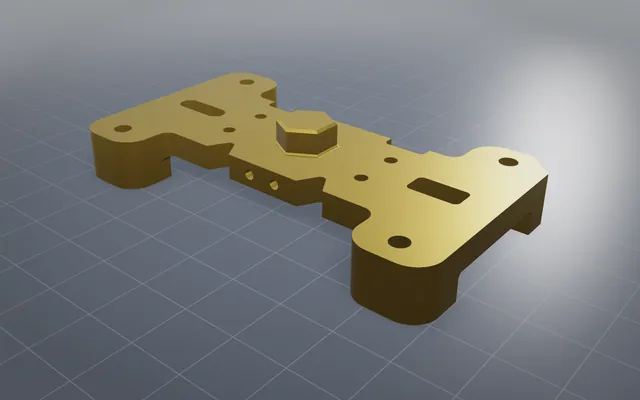
Less geometry at the same tolerance
Small holes, fillets and bosses removed and the solid healed watertight, ready for scenes and simulation.
NURBS ops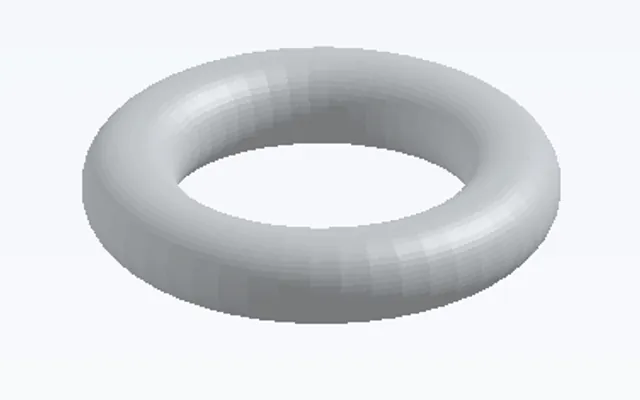
Curved offsets, shells and surfaces from points
Offsets and shells on curved solids, exact surfaces through point grids, and a mesh turned back into a solid.
6 curved operations Tolerance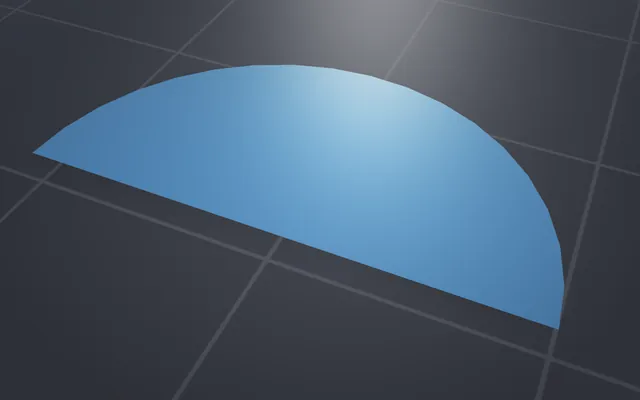
Declare the gap, name the weld
A seam that will not close at the model's tolerance welds shut once the edge carrying the gap declares it.
V12 engine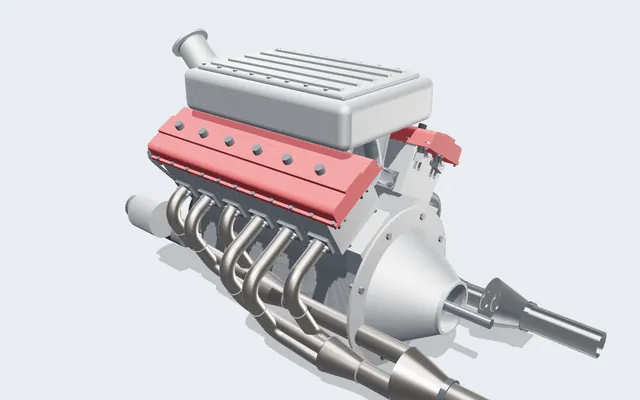
A V12 engine you can run, slice and take apart
Every crank, rod, cam and valve is a real solid, turning in your browser from one dial: the crank angle.
372 parts · 2,912 placementsBuild your own part with NativeCAD
Try it free with the keyless evaluation · $200 per seat per year · Kernel SDK for products.