Our vehicles, as kits you can print at home.
Every vehicle in the NativeCAD Space Program was modelled in our own CAD kernel. The same kernel turns each one into a print kit: split into parts that each sit flat on a desktop FDM printer's bed, the small ones shaped so nothing overhangs past 45 degrees, with pins, hinges and axles where they belong, or hollowed into a one-piece resin display model.
Ventrix HX
Our own electric hypercar. The kit's butterfly doors swing up on pin hinges and the wheels roll on axles; the resin version is one hollow piece for the shelf.
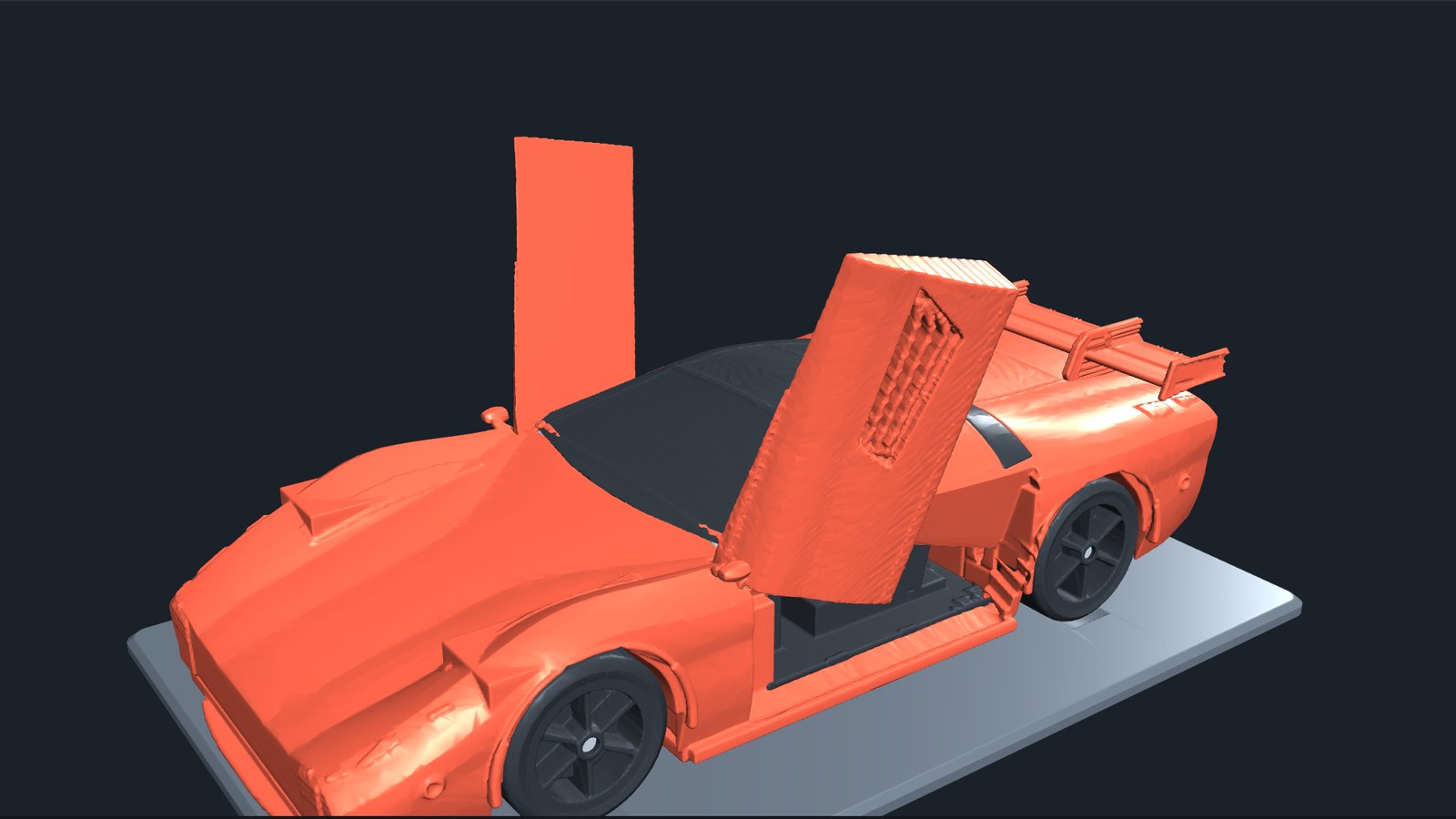
Drag to turn, pinch or scroll to zoom.
Parts
| Part | Qty | Size, mm |
|---|
Print settings
Print beds
Putting it together
How a model becomes a kit
One recipe per model, one pipeline for all of them. The recipe names the scale, where the model splits, which way each part sits on the bed and where the pins, hinges and axles go; the pipeline does the rest and checks every part before it is offered for download.
Scale to the printer
The model is scaled to fit a 256 mm FDM bed or a small resin vat, so the same recipe makes both kits.
One watertight solid
Hundreds of modelled parts are merged into closed solids a slicer can trust: no holes, no loose shells, no faces inside faces.
Thin walls made printable
Anything thinner than the printer can lay down, a mirror stalk or a wing endplate, is thickened to the minimum wall; surface detail on thick panels is left exactly as modelled.
Supports only where the shape needs them
Each part sits on a flat face. The small parts are shaped so nothing overhangs past 45 degrees, with a self-supporting chamfer on hidden faces. A large shell like a car body keeps its real undersides and prints with the slicer's supports there, so the visible surfaces stay true to the model. Every part is sliced with automatic supports switched on, and the kit lists which ones need them.
Fits that work
Sockets and alignment pins on the cut faces, a hinge pin for each door, hex axles pressed into the wheels, with 0.2 mm running clearance on FDM and 0.1 mm on resin. Each moving part is swept through its full travel and cleared.
Hollow resin, drained
The resin model is hollowed to a thin shell with drain holes on the underside, and every cavity is checked to reach a drain so no uncured resin is trapped.
More demos
All demos →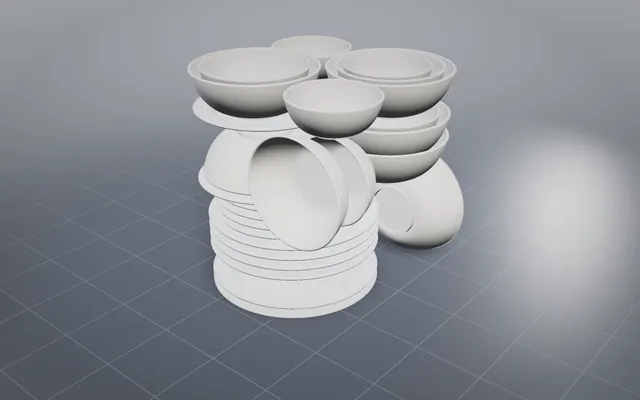
A whole dinner service nested in one SLS build
Bowls inside bowls and plates under plates, every gap proved on the real triangles before the build starts.
30 pieces, one SLS build GE bracket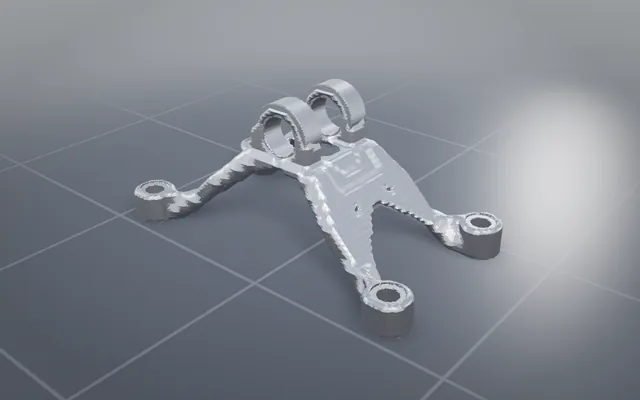
The GE jet engine bracket, lighter and carrying every load
The classic titanium bracket optimised and offered to print, cast, machine or weld, with STEP to download.
83.6% lighter Printed pendant
A planetary gearbox you can wear, printed in one piece
A working gearbox pendant that comes off a desktop printer already assembled and turning, in two colours.
5 moving parts, one print FEA loop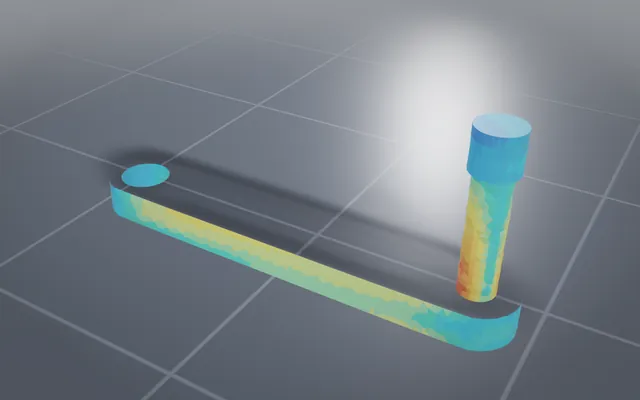
Finite-element analysis your agent can run
Stress and vibration results from the same AI session that built the part, with the peak and its margin.
6 designs solved in FEABuild your own part with NativeCAD
Try it free with the keyless evaluation · $200 per seat per year · Kernel SDK for products.