One design, every machine on your team, no server in charge
Pair two machines with a join code and they work as one NativeCAD team. Every part has one owner. Only a part version that passed its checks reaches the others. Solver jobs go to whichever machine has free cores, with nothing to schedule and no server to run. Below, two of our machines share a topology-optimisation sweep of the GE jet engine bracket: 24 candidates, claimed by the machines themselves, and the same lightest bracket on both.
Watch two machines share the work
Both machines, run 6
Claim rule alone, as it ships: a slower machine takes only a candidate it would finish before the faster one got through the queue.B ran up to 8 at once and took 14 of 24; A took 10.
The same answer on every machine
Identical results
All 192 solves matched the same candidate on the other machine in mass, screening safety factor and piece count, to every recorded digit. All 8 runs named vf 0.175 r 6: 0.372 kg, SF 2.22, cut from a 2.044 kg envelope.
Nothing done twice
Every candidate was claimed once and solved once, across all 8 runs. The machines settle claims among themselves; no machine hands out work.
A busy machine stays out of the way
A machine takes only a job it would finish before a faster member got to it, so a busy laptop helps when it can and steps back when it cannot.
A screening number, ranked on one ruler
The safety factor is yield over the peak stress of a 4 mm voxel model. It ranks the candidates; signing a part off uses FEA on the real geometry, as on the GE bracket page.
How a team works
Two or more machines, each running NativeCAD, each with its own background node. The same steps whether the team has two machines or ten.
Pair
One machine creates the team and gets a join code. The other joins with that code and the first machine's address. A code carries 100 random bits, works once, and expires after 30 minutes. Anyone with the key is a trusted member, and removing one changes the key for everyone else.
cad_team {op:"create"} here, cad_team {op:"join", code, address} there
FeatureBoard's fleet runs on the same job library, so a FeatureBoard fleet and a NativeCAD team share one job layer. With FeatureBoard on a machine, its team node takes its team from FeatureBoard's fleet.
The part they shared
The design envelope: a base plate with four bolt holes and a clevis for the pin, 2.044 kg in titanium. Each candidate is a topology optimisation inside it at one volume fraction (0.1, 0.125, 0.15, 0.175, 0.2, 0.25) and one minimum member radius (6, 8, 12, 16 mm).
The winner keeps 0.372 kg of it. The envelope is our own rebuild from the challenge's published loads and dimensions. No GE or GrabCAD geometry was used. The GE bracket page has finished, checked versions you can turn and download.
Start a team in two commands
Teams ship in NativeCAD 0.30.0. Ask Claude on each machine to pair them, or call the tool directly:
On the first machine:   cad_team {op:"create"}          → a join code
On the second machine:  cad_team {op:"join", code, address}
Then, on either:        cad_team {op:"check-in"}        → members, link, free cores
Each machine's node keeps syncing with no chat open. Pinpoint shows the team's goals, pins and versions. See the release notes for what changed.
Build your own part with NativeCAD
Try it free with the keyless evaluation · $200 per seat per year · Kernel SDK for products.
More demos
All demos →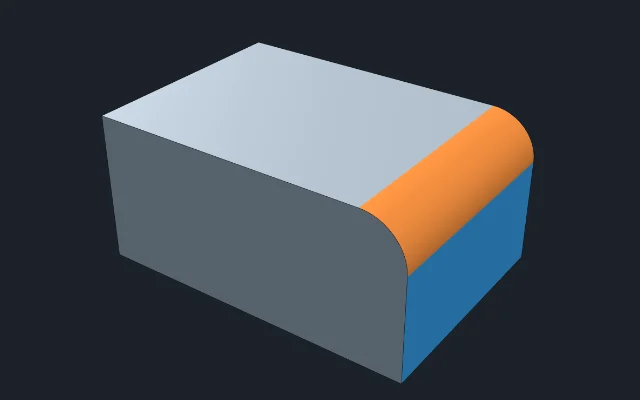
The crown jewels of CAD, live in your browser
Names that survive edits, failures that stay local, a sketch solver and live rules, on the real kernel.
0 of 2,301 refs misattached Defeaturing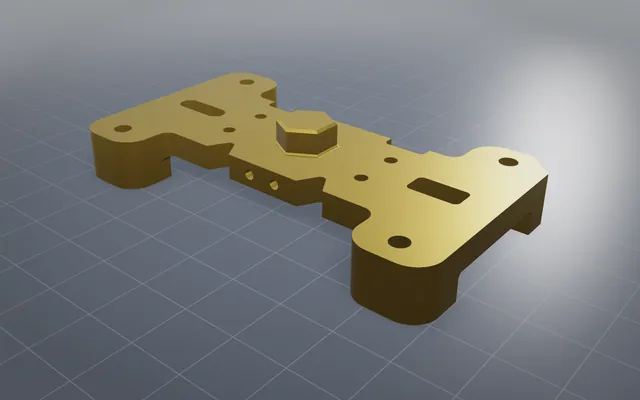
Less geometry at the same tolerance
Small holes, fillets and bosses removed and the solid healed watertight, ready for scenes and simulation.
NURBS ops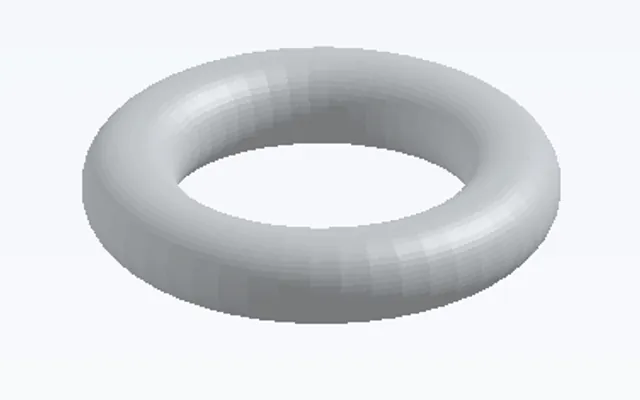
Curved offsets, shells and surfaces from points
Offsets and shells on curved solids, exact surfaces through point grids, and a mesh turned back into a solid.
6 curved operations V12 engine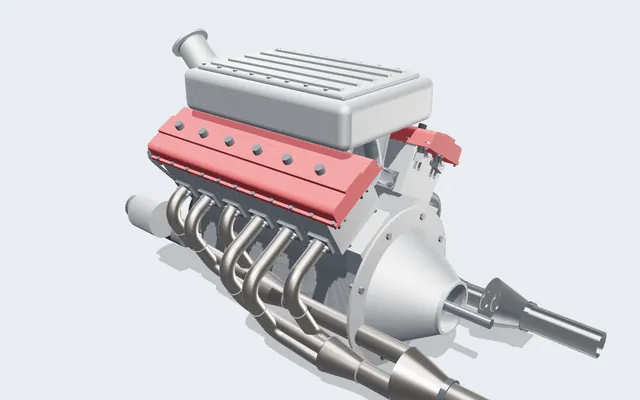
A V12 engine you can run, slice and take apart
Every crank, rod, cam and valve is a real solid, turning in your browser from one dial: the crank angle.
372 parts · 2,912 placementsBuild your own part with NativeCAD
Try it free with the keyless evaluation · $200 per seat per year · Kernel SDK for products.